Why Visit Tokyo: The Easiest Huge City in the World.
September 15, 2026 · 8 min read · By Seven Sunsets Travel
September 15, 2026 · 8 min read · By Seven Sunsets Travel
Tokyo is the rare city that is enormous and effortless at the same time. Thirty-seven million people, the best public transport system on earth, food that ranges from a $6 bowl of ramen to the most Michelin-starred restaurants of any city in the world — and a level of order and safety that makes a first-time visitor relax about two hours after landing.
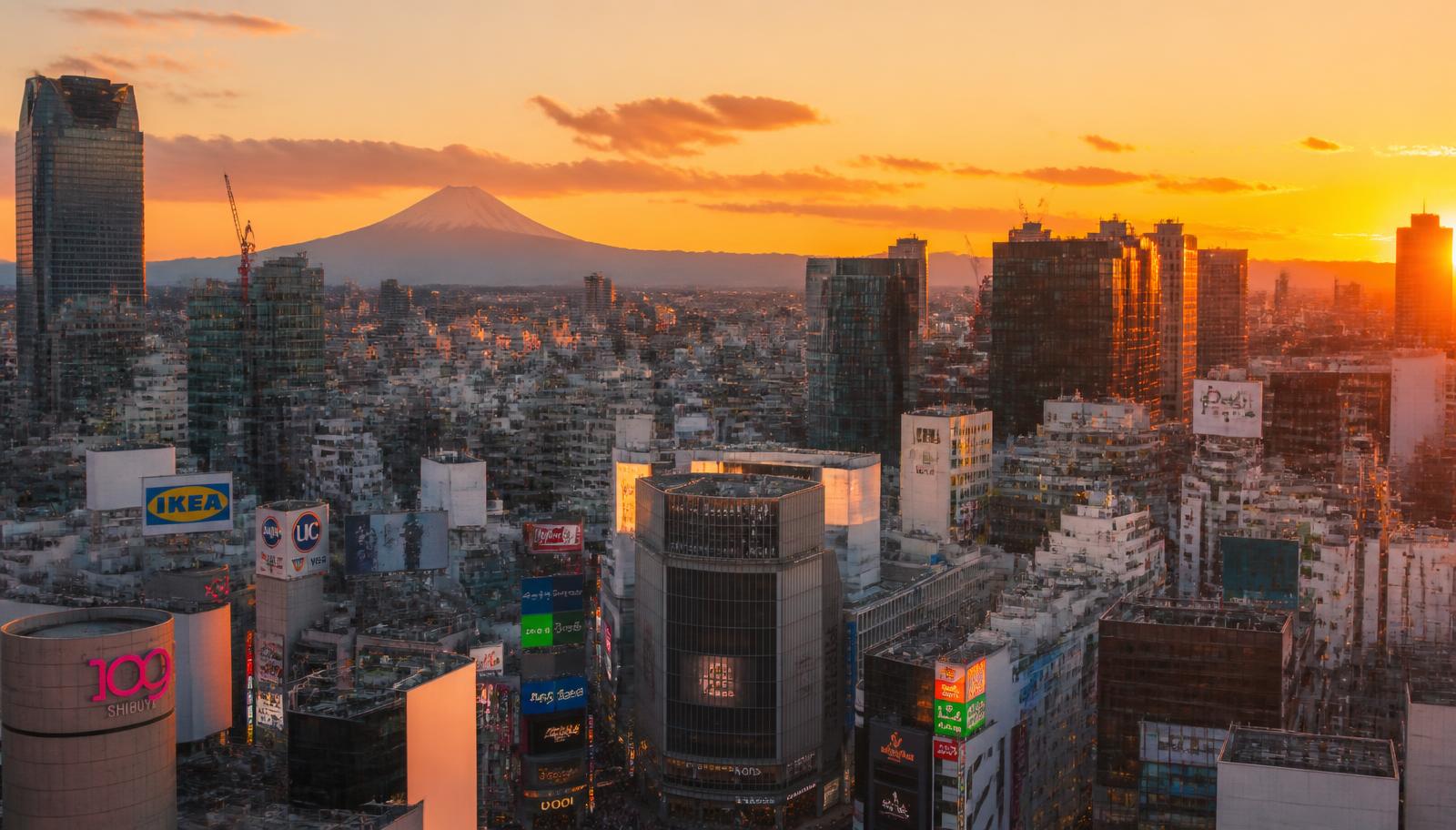
Because it gives you three completely different trips inside one city. There is the neon Tokyo of Shibuya Crossing, Shinjuku's alleyways and the department-store food halls. There is the quiet Tokyo of Meiji Shrine's forest, the temple lanes of Yanaka, and morning incense at Sensō-ji before the crowds arrive. And there is the day-trip Tokyo — Mount Fuji and Hakone, the Great Buddha at Kamakura, the shrines of Nikko — all within two hours of your hotel.
It is also easier than its reputation. Station signs and train announcements are in English, IC cards let you tap through every train and convenience store, taxis are spotless, and crime is close to nonexistent. Japan's tourism board has recorded record visitor numbers for good reason: the yen has made it one of the best-value major destinations in the world for American travelers.
Eating in Tokyo is not about one famous meal. It is the standing sushi counter where lunch costs $15. It is a bowl of tonkotsu ramen ordered from a vending machine at the door. It is the basement food hall (depachika) under a department store, where the strawberries are individually wrapped and the tempura is better than most restaurants. It is convenience-store egg salad sandwiches that you will genuinely think about later.
Three things to know: tipping is not a thing and can cause confusion, many of the best small restaurants seat six people and take reservations weeks out, and lunch at a high-end kitchen often costs a third of the dinner price for nearly the same food. That last one is the single best value hack in the city.
Worth it: a day trip to Hakone and Mount Fuji, with the lake, the ropeway over the sulphur vents and a view of the mountain that stops conversation. Early morning at Sensō-ji. teamLab's digital art museum. The Shinjuku Gyoen gardens. A sumo tournament or a morning stable practice if your dates line up. And one proper kaiseki or sushi lunch — book it before you fly.
Be careful with: Tsukiji's inner market, which moved to Toyosu years ago — the outer market is still good for street food, but skip the 4 a.m. pilgrimage. Robot-style theme restaurants, which cost a fortune for a show. And overpacking your days: Tokyo's distances are larger than the subway map suggests, and three big things a day is a full, satisfying day.
Tokyo is cheaper than most Americans expect. Budget $180–260 per person per day outside flights for a comfortable mid-range trip: a well-located hotel, all your train travel, one paid activity and three good meals. Ramen or a rice bowl runs $7–12, a solid sit-down dinner $25–45, and a single subway ride about $1.30. A Mount Fuji day trip with transport lands around $90–150 depending on how much you outsource.
Skip the nationwide Japan Rail Pass unless you are leaving the region — for a Tokyo-based week, a rechargeable Suica or Pasmo card is cheaper and simpler.
Late March to early April is cherry blossom season — spectacular, and the most expensive, most crowded window of the year; book six months out. Late October to early December is the insider pick: clear skies, fall color in the gardens, comfortable walking weather, and the best odds of actually seeing Mount Fuji, which hides behind summer haze. Avoid mid-June to August unless you are fine with heat and humidity, and avoid Golden Week in early May, when the whole country travels at once.
It may be the best big city in the world for it. Solo dining is completely normal — many restaurants have counter seats and some have single booths designed for it. The streets are safe at night, the trains are reliable, and nobody will look twice at a woman traveling alone at any age. The only real friction is the language barrier in smaller restaurants, and a translation app clears most of that in seconds. Our solo travel hub covers how we plan Japan for women traveling alone.
Three days in Tokyo gets you the highlights and a nagging sense that you only saw the surface. Seven days is where it clicks: four days working through the city's distinct neighborhoods, a full day out to Hakone and Mount Fuji, a half-day in Kamakura or Nikko, and enough breathing room for the small discoveries that end up being your favorite part.
The hard part is sequencing. Tokyo rewards grouping sights by rail line, timing temples for early morning, booking restaurants and Fuji day trips well ahead, and knowing which day to hold for clear weather. That coordination is exactly the work that swallows a weekend of research.
Our seven-day Tokyo itinerary maps the whole trip: day-by-day plans grouped by neighborhood and rail line, a hotel matched to your budget tier, booking links for the Mount Fuji and Hakone day, restaurant picks at every price point, and the hidden gems that do not show up on the first page of search results. Three tiers, one flat price, no commissions, no planning calls.
You book everything yourself and keep your points and your refunds. We just remove the twenty hours of research in front of it.
8 min read
Walk behind a waterfall, stand on a glacier, soak in a geothermal lagoon — and yes, have a life-changing cinnamon roll in Reykjavik. Why Iceland is the perfect first big trip.
8 min read
Museums, neighbourhoods, $26 bistro lunches and the reopened Notre-Dame. An honest case for Paris — and how long you actually need to do it properly.